

You know:
Advertising and psychology aren’t that far apart.
The ultimate purpose of advertising is to persuade.
But it’s psychology that provides insights that help to create persuasive ads.
Because, you see, turns out we’re quite easily suggested.
In 1903, Walter Dil Scott, one of the first psychologists to become interested in advertising wrote:
“Man has been called the reasoning animal but he could with greater truthfulness be called the creature of suggestion. He is reasonable, but he is to a greater extent suggestible.”
Other research followed and today there are hundreds of mind tricks advertisers use to persuade audience to take action.
Not all of them are ethical, I admit.
However, there are some touching upon traits of human behavior you probably should know about when aiming to increase your Facebook ads conversion.
And in this post I collected 11 of the most effective ones.
Part 1. Headlines
A couple of weeks ago I showed you some ways to write attention-grabbing headlines. Some of these are simply copywriting formulas. Others however were various mind tricks you could use to capture the user’s attention.
In this post I’ll just reiterate the latter. But I urge you to read the entire post.
Tell Users They Don’t Know as Much As They Thought
You know:
Back in 1757, Edmund Burke, an Irish statesman said:
“Curiosity is the most superficial of all affections; it changes its object perpetually; it has an appetite which is very sharp but very easily satisfied; and it has always an appearance of giddiness, restlessness and anxiety.”
Curiosity has been recognized as a critical motive that influences human behavior.
And it’s no surprise that it’s a focus point of many advertising mind tricks.
Take the curiosity gap theory for instance. The term, first coined by George Loewenstein, refers to our underlying need to fill the blanks in our knowledge.
Apparently, realizing that we don’t know something makes us compelled to find that missing piece of information.
This mind trick is probably one of the sole reasons why Upworthy’s headlines (most using curiosity gap to attract attention) receive 152% more Facebook likes than other similar sites.
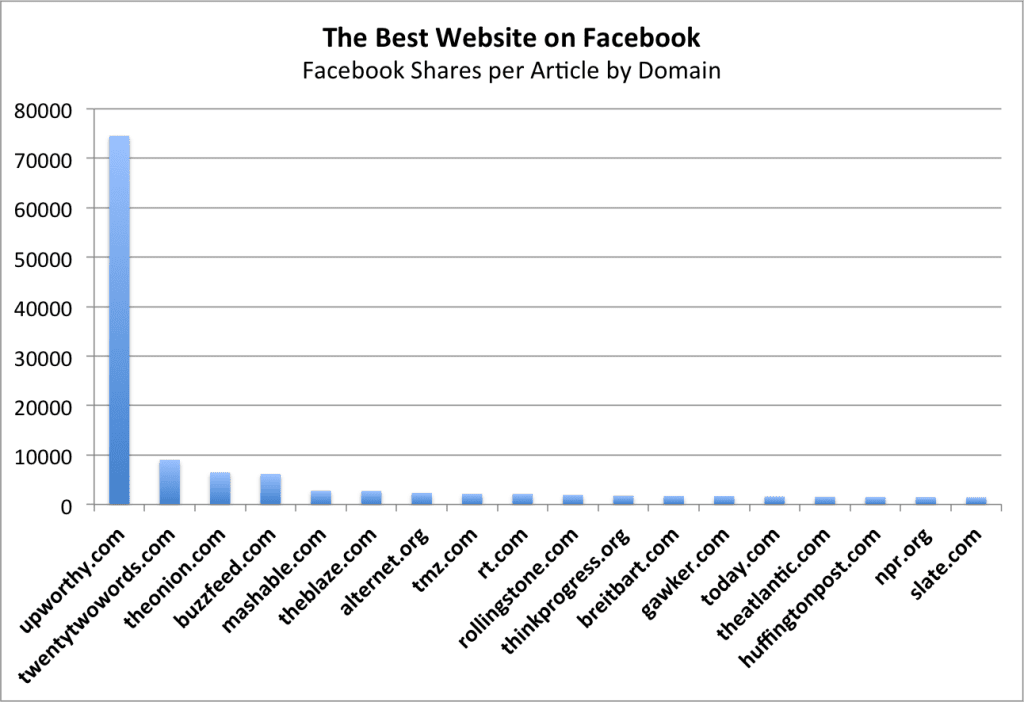
But if seeing a graph like that makes you want to start writing curiosity gap driven headlines, a word of warning.
Remember:
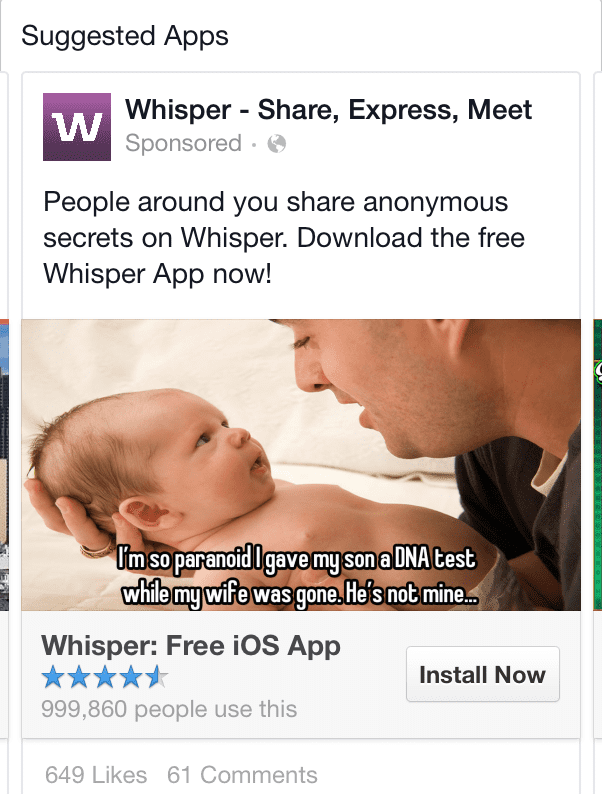
Readers don’t like being cheated. If you decide to target curiosity gap, make sure that your landing page, offer and every other aspect of campaign delivers on what you have promised.
Use Negativity to Improve Headline Performance
Weird:
Headlines including negative superlatives (i.e. worst, never) perform better.
But I’m sure you thought that positives (i.e. better, always) would have a much stronger effect on readers.
Turns out that’s not true.
According to a study by Outbrain, headlines with positive superlatives performed 29% worse than the ones including negatives.
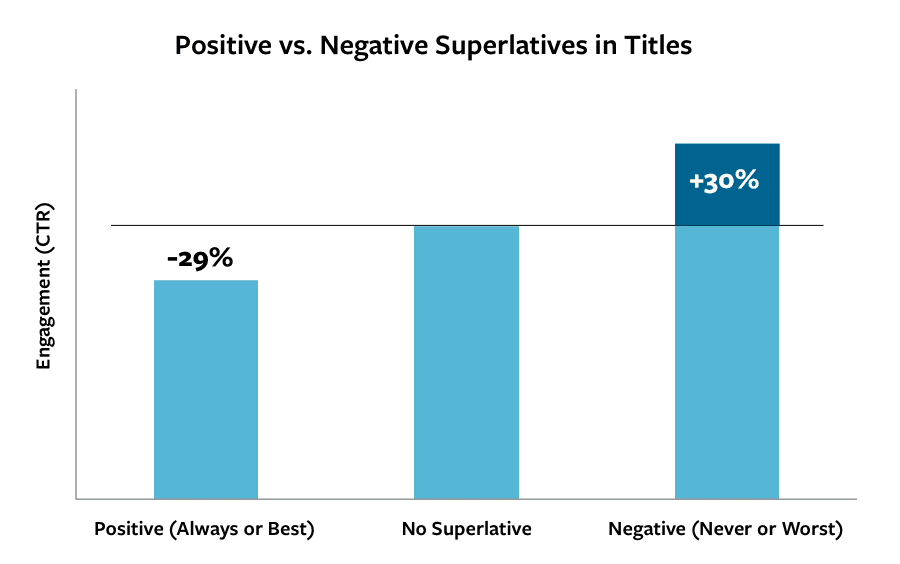
It means that even though writing headlines like:
- X best ways to cure acne or,
- X best products for father’s day…
…seems like a good idea, they are bound to attract less clicks that if you turned them around and focused on negatives.
Write explicit headlines to connect with readers
According to this study by Conductor, explicit headlines, in particular those containing numbers attract much greater attention.
The reason for that is actually very simple:
We humans have a dislike for uncertainty.
That’s a reason why we perceive waiting time as shorter if we are told how long we’d have to wait (here’s more information about research conducted on the subject).
Knowledge and information help us to manage our expectations and organize the world around us.
Numbered headlines reveal just enough information to make them explicit and thus, help us manage the expectation about what we’re going to find there.
Part 2. Ad Copy
The role of a headline is to attract a user to your ad.
But it’s the ad copy that persuades them to take action.
And thus, you need to write it to convince or influence a person to click on the link and follow it to your landing page.
The most effective way advertisers use to achieve it is by using either emotional or rational appeal.
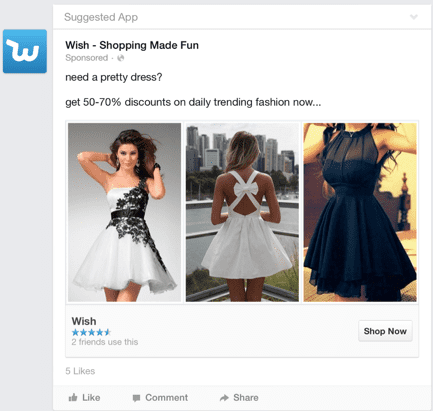
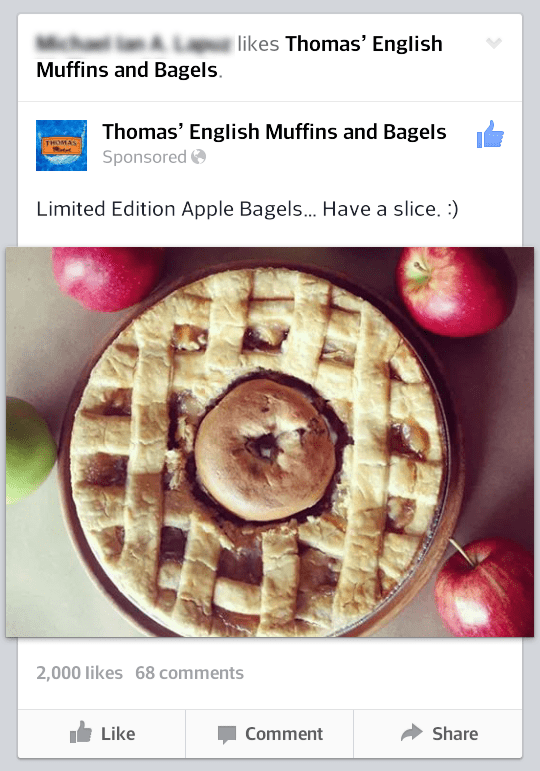
Emotional appeal is designed to induce an emotional response that will motivate a customer to take action. The most common emotions used by advertisers are greed, exclusivity, fear and vanity.
In this ad Wish uses greed to entice a customer to click on their ad.
Thomas’ English Muffins and Bagels use exclusivity:
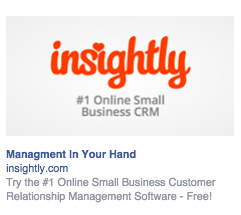
A rational appeal on the other side targets your audience’s logical side. It persuades by showing the practical benefit of a product or service. Price listing benefits or prices or featuring testimonials use rational appeal to attract and persuade users.
Insightly’s ad boasts the “no. 1” claim, for instance.
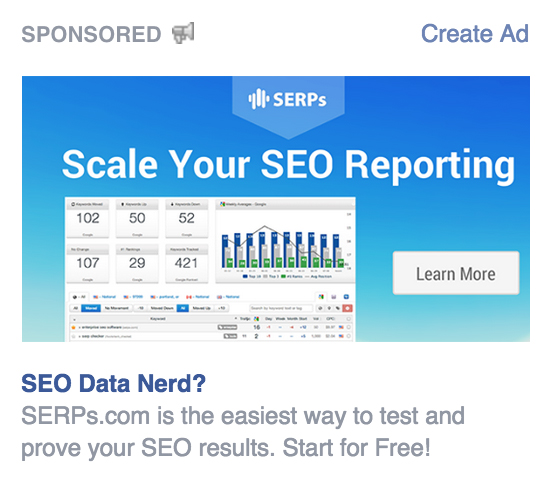
SERPs make the claim about ease of use of their tool.
Part 3. Price
It’s true:
You don’t have to mention the price to make the ad effective.
But if you decide to do it, there are some cool mind tricks you could use to make it seem more attractive than it might really be.
For instance:
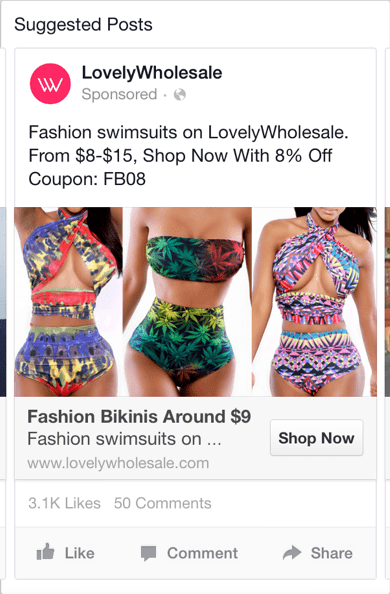
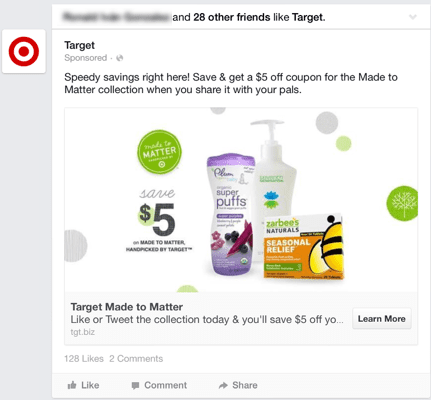
If you sell products often purchased by emotion, round up their prices
Interesting:
Our brains process rounded prices (e.g. $19) much quicker than if they’d contain the cents (e.g. $19.25).
This year’s research by Monica Wadhwa and Kuangjie Zhang published in the Journal of Consumer Research revealed that our minds process rounded numbers much quicker.
And for that reason rounded prices work better when we need to make a quick buying decision.
Raise the price to confirm the product’s superior quality
You won’t believe it but….
Turns out that we enjoy things if we pay more for them.
That’s at least according to a research published in the Journal of Sensory Studies (found via this source) in which researchers charged some diners at an “All-you-can-eat” buffet 4 dollars per meal while others paid double that amount.
And turned out that those customers who paid the higher price rated the meal more highly on the measures of taste, satisfaction and enjoyment.
Experiments with other products confirmed a similar behavior.
And so, if you’re trying to position your product as higher quality, don’t be afraid to advertise a higher price. To many users it will be nothing short of a powerful signal of its high qualities.
Cut the left-most digit to make the price seem lower
There are many theories why so many prices end with a digit 9.
Some people claim that it’s because of the number’s magical qualities. Or because of many other reasons.
But the real reason seems to have nothing to do with the number at all!
You see:
Reducing the number by one cent often cuts the left-most digit of the price.
And according to this research, it’s that digit that’s responsible for our perception of the price.
In other words, we’ll perceive the difference between 4.99 and 5.00 as bigger than between 5.50 and 5.49.
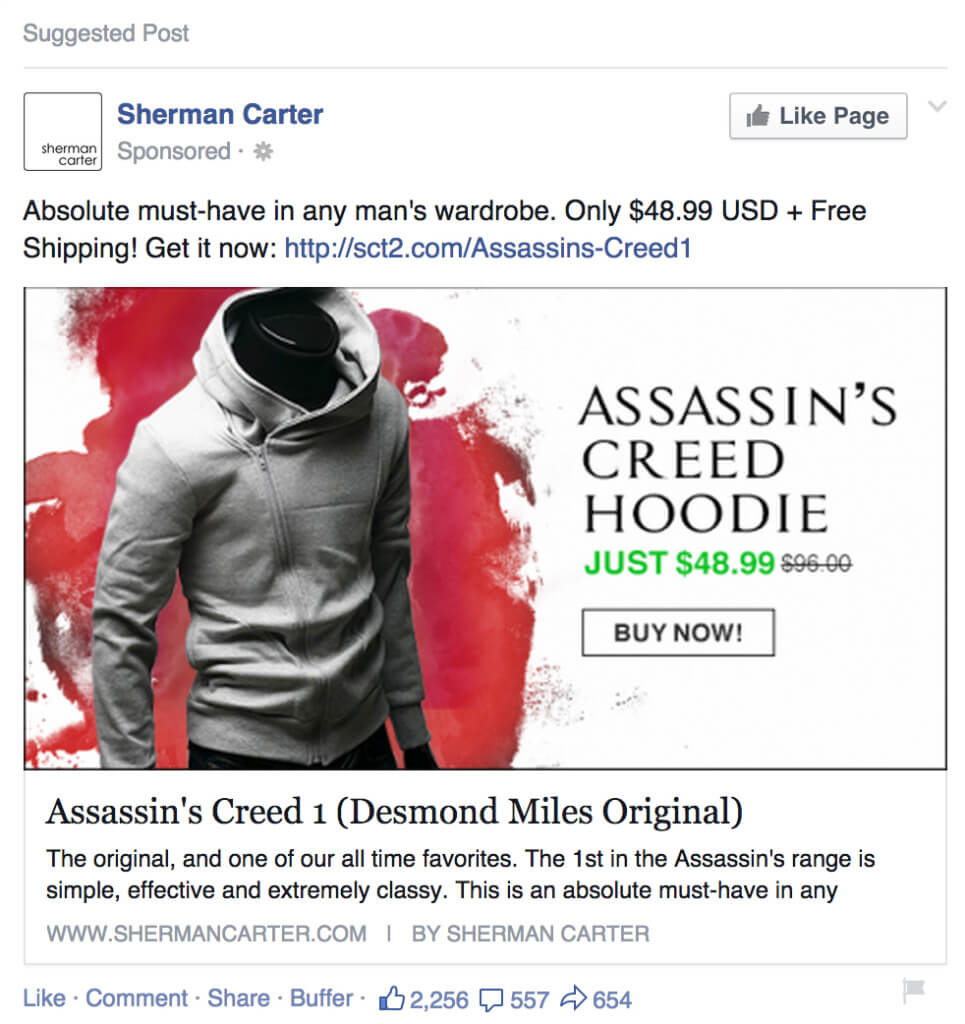
This mind trick naturally works the other way around too. If you want to increase the number, don’t add 9 at the end.
Part 4: Images and graphics
It’s no secret:
Ad images affect click-through rate and conversions.
In a 2011 study researchers from eBay discovered that:
- Product images impact the users behavior.
- The lightness of the background is the most correlated feature to CTR
- You can predict the ads CTR by the image it includes.
And it’s no surprise that advertisers use a number of tricks to make ad images more appealing to users, for instance:
Images in which product is held in right hand attract more attention
We are naturally drawn to the right hand (as most of us are right handed) and thus, images of products held in a right hand attract more attention.
This is in fact an old marketing trick.
Take supermarkets for instance:
Most are designed to make you move from right to left. What’s more, products you are most likely to buy tend to be placed on your right side.
It’s no different in advertising. Just think of a Coke ad in which a person picks up a can or bottle from a fridge. Which hand do you think they use?
Colors are crucial if you want to convey emotions
We’ve already talked about using emotional appeal in advertising. But do you know that you could evoke it not only with words?
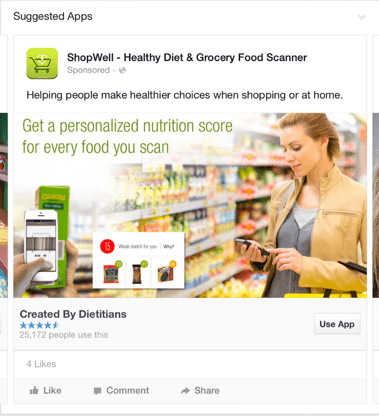
Colors for instance can suggest emotions too, for instance:
- Blue suggests trust,
- Red, excitement and
- Green means fresh.
And thus, colors you use in your ad visuals will matter not only to attract attention but also help a user to feel emotions you want them to feel.
The right picture will get a user to mimic the emotion
Sounds familiar?
You watch a movie and in one scene, a protagonist is in a car crash. And just as the car hits the obstacle, you grimaced with pain.
You see, these were mirror neurons in action, tiny cells in our brains that help stimulate in the observer the same emotional state of the observed. In other words, they help us experience what other people are feeling.
This also means that we would mimic what we see in advertising.
And thus, if you want to evoke happy feelings in the user, feature smiling and happy faces.
Seeing them, the person’s is going to react in a similar manner.

No comments:
Post a Comment